

FIS Code of Conduct for Training and Safety
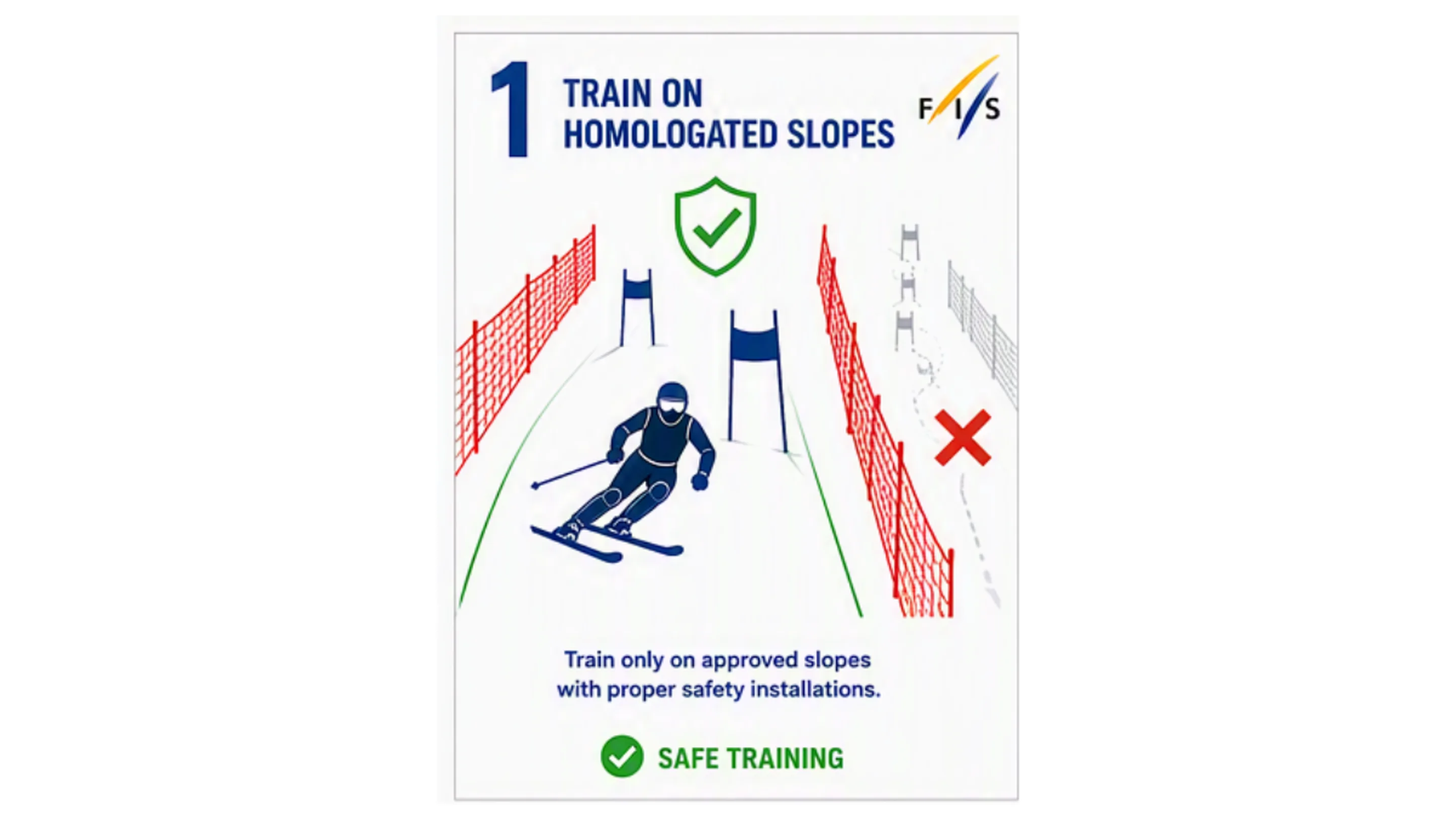
Rule 1: Train on Homologated Slopes
Consider national and/or international homologation of slopes for the selection of training courses and follow the outlined plan for safety installations, along the course and the finish area, including timing equipment.
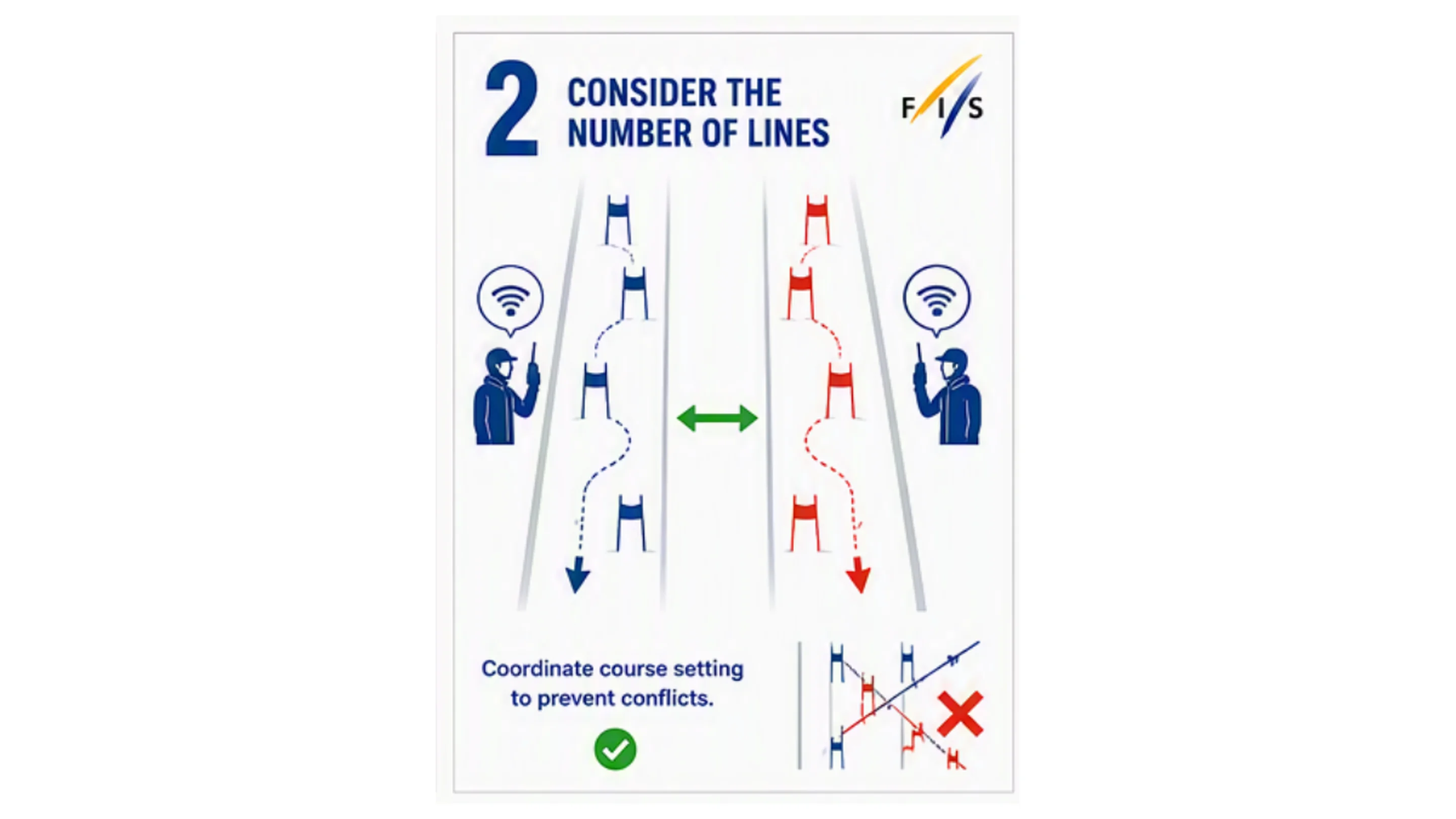
Rule 2: Consider the Number of Lines
Carefully consider the number of lines set and actively communicate with other teams training at the same time.
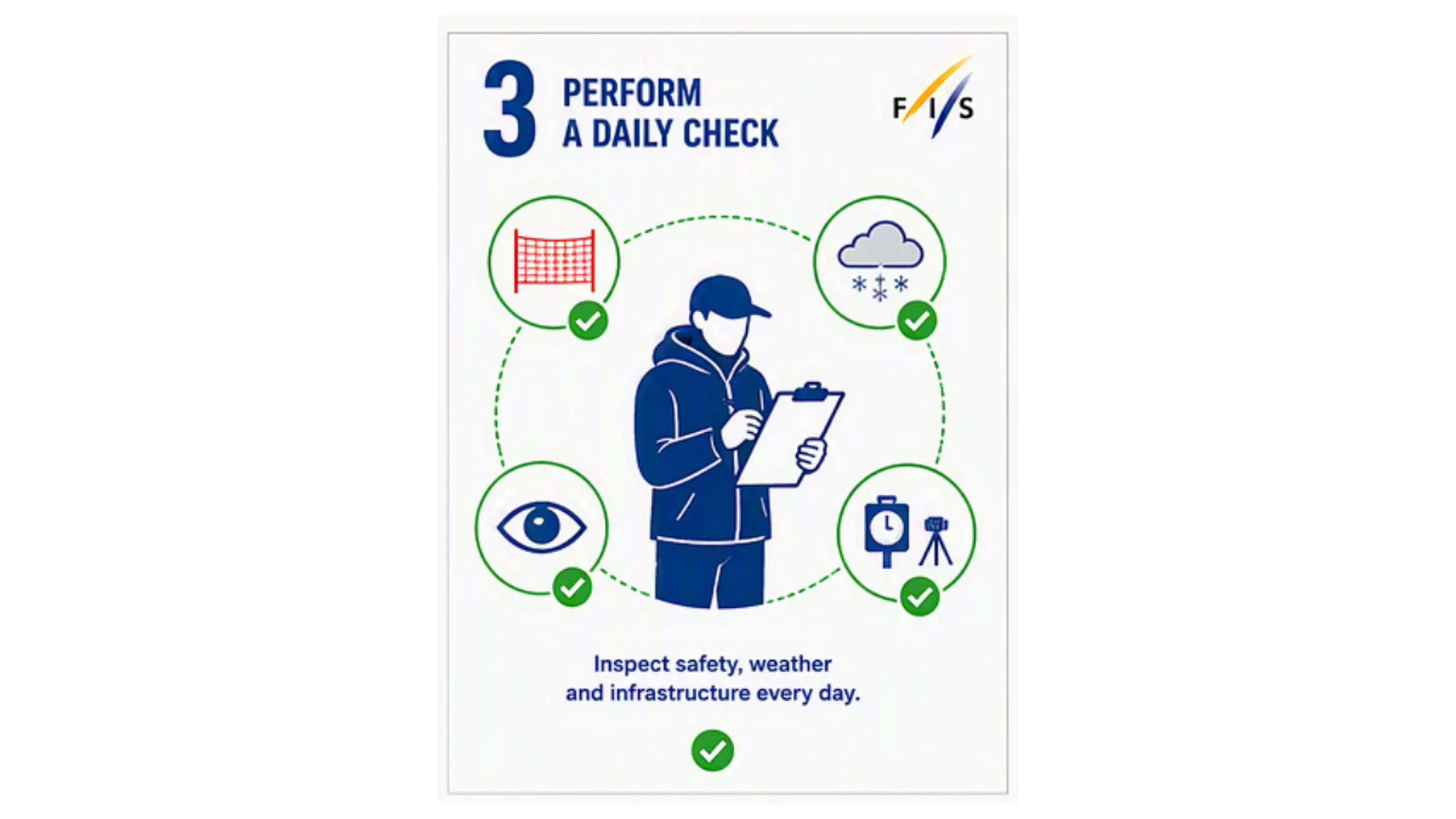
Rule 3: Perform a Daily Check
The daily check should include the training framework, including adequate and undamaged application of safety installations as well as the consideration of weather and visibility. Use available safety checklists, e.g. FIS Safer Training Checklist.
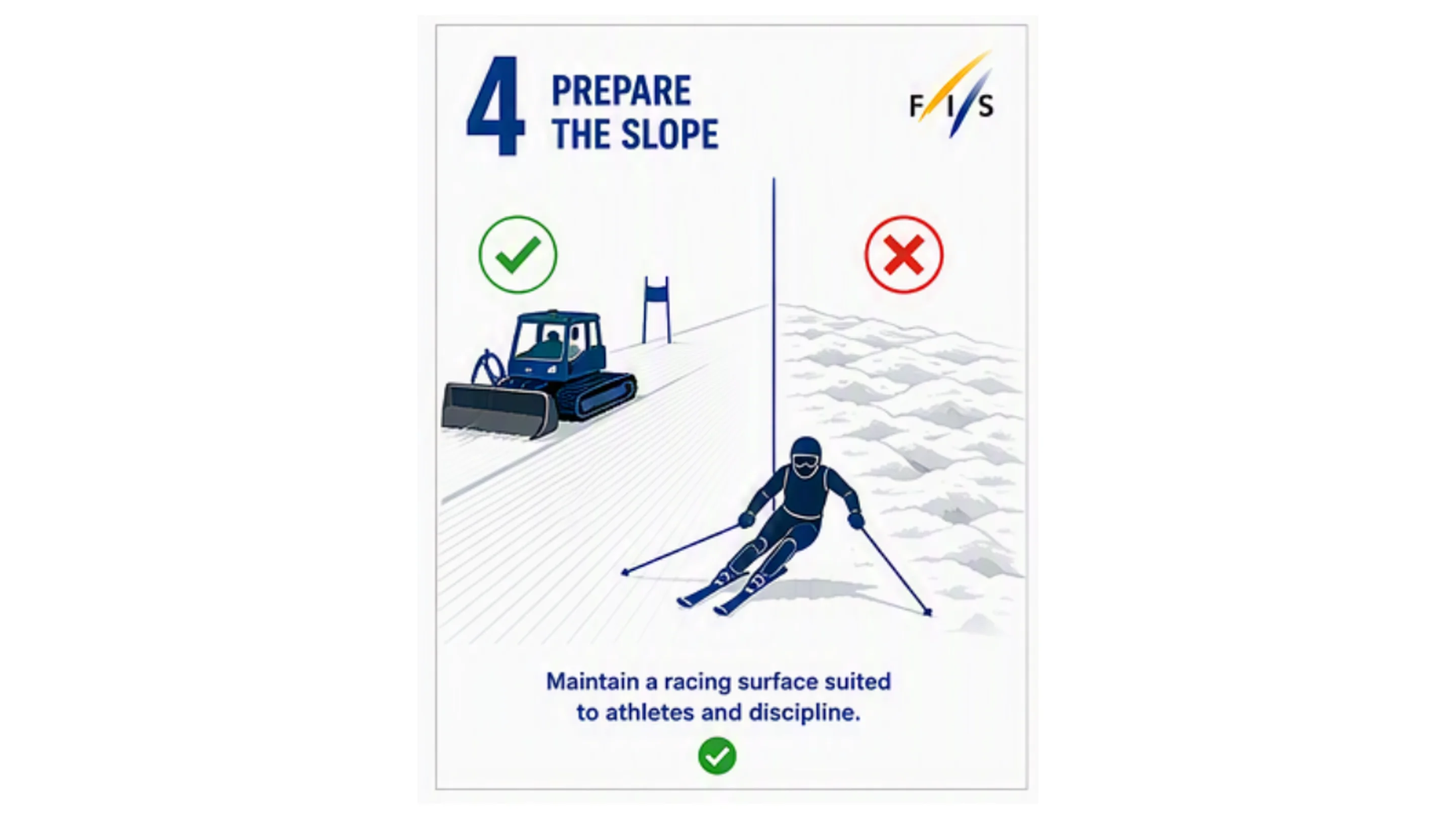
Rule 4: Slope Preparation and Appearance
Considering the discipline and athletes on the course, choose and prepare the slope in appropriate way. Also slope maintenance (e.g. slipping) should be organized within the teams.
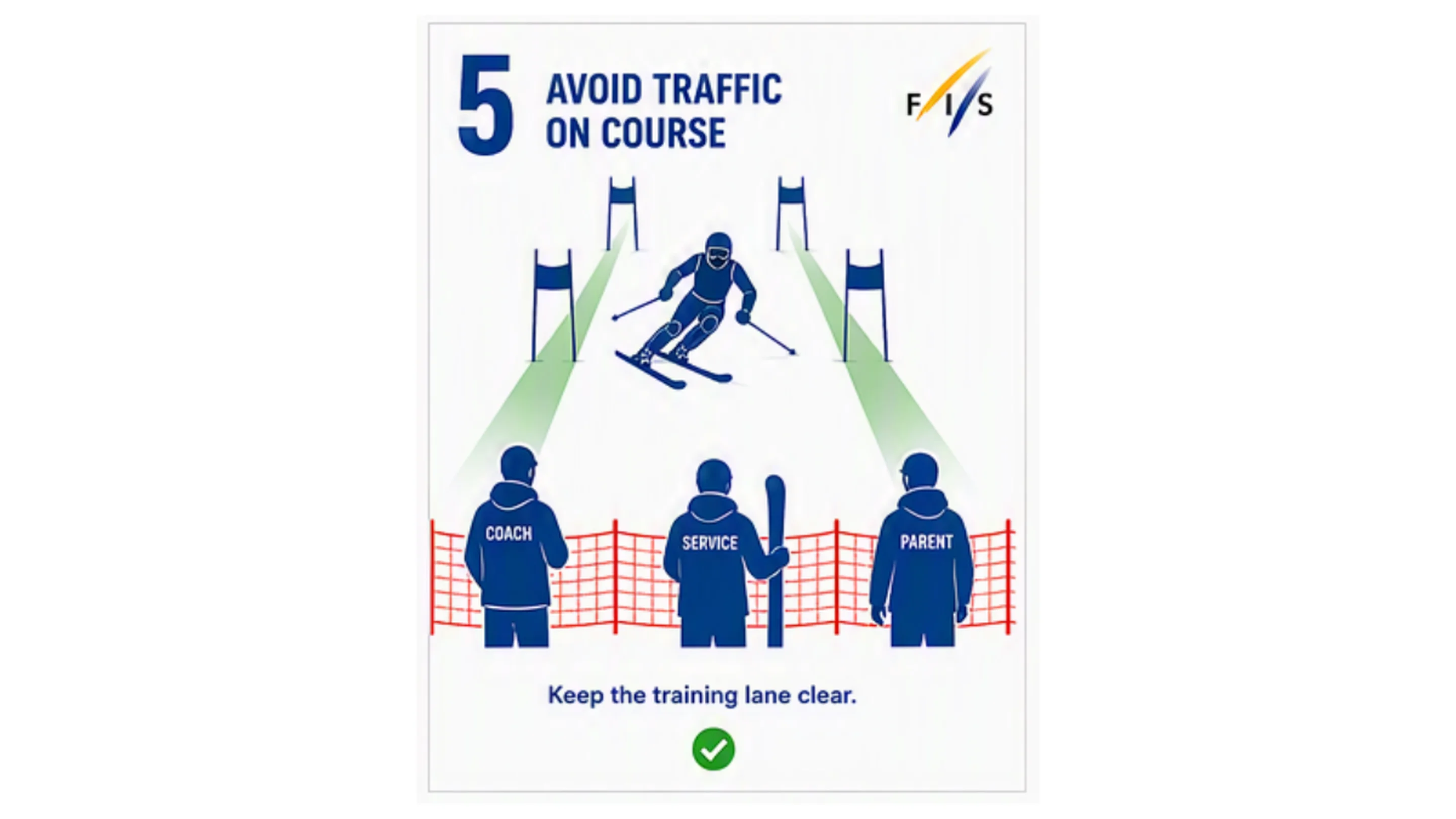
Rule 5: Avoid Traffic on Course
Reduce the traffic on a training course (coaches, service personnel, parents, athletes) to a bare minimum during training and organize slipping and course preparation in adequate manner.
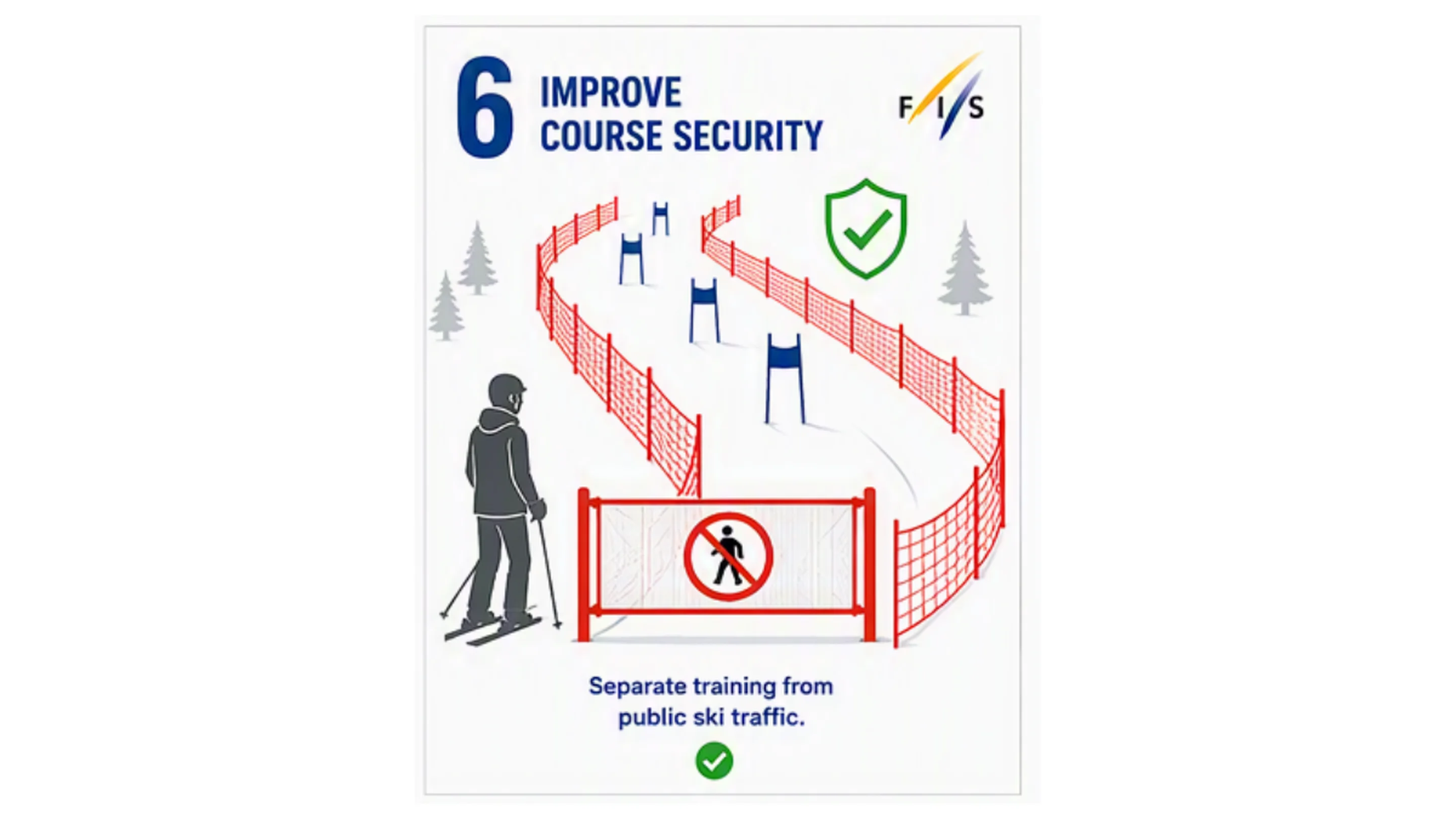
Rule 6: Impede Public Accessibility
Make sure the training area is clearly separated from public slopes and unauthorized people cannot enter.
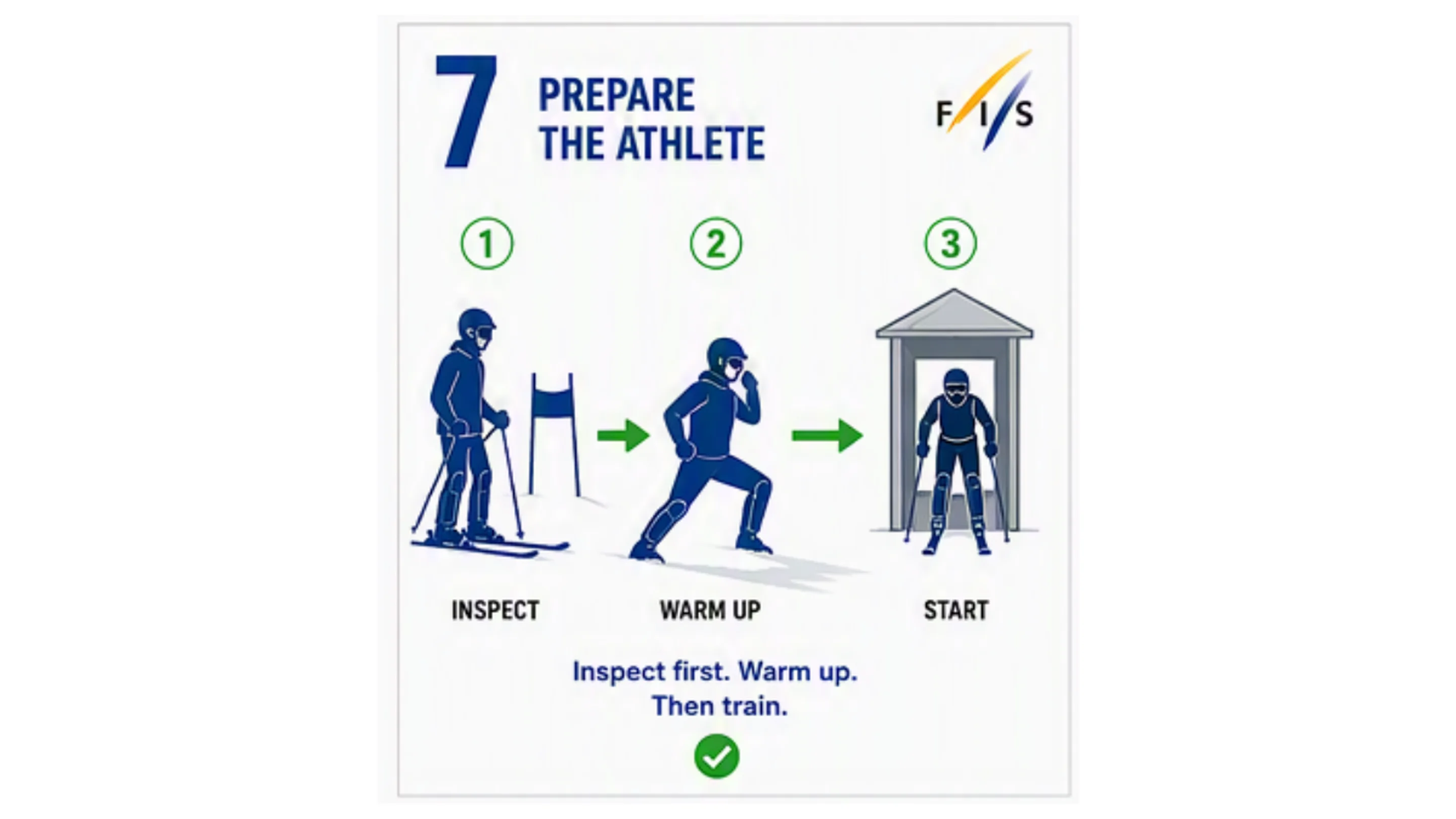
Rule 7: Facilitate Preparation for Athletes
Make sure athletes can inspect the training course and perform a proper warm-up before the onset of training.
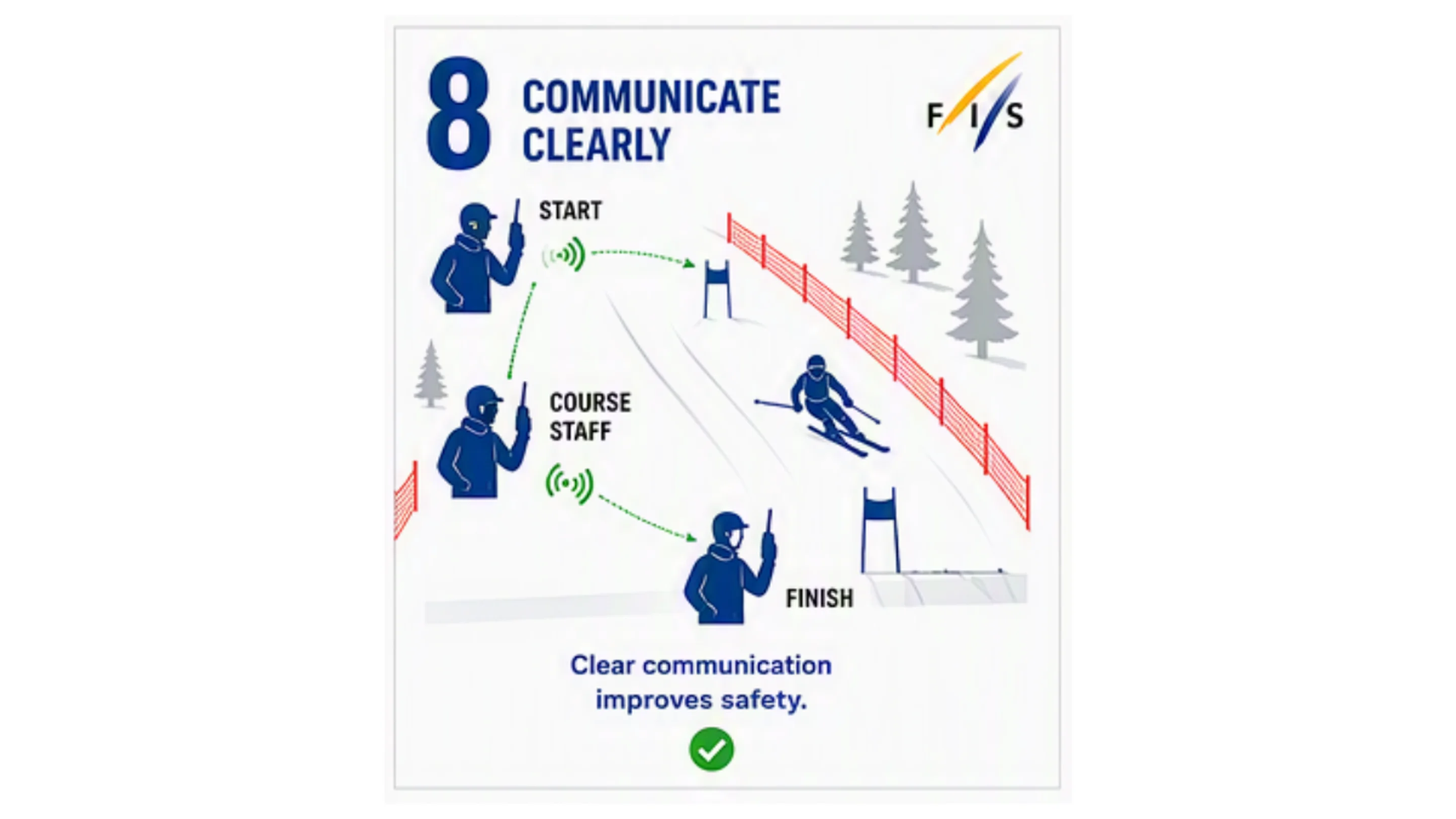
Rule 8: Enhance Team Communication
Make sure to communicate with your team on the training procedures and clear commands in case of adaptations. Coaches and staff should be placed along the slope and allow for communication with athletes at the start (e.g. team radio).
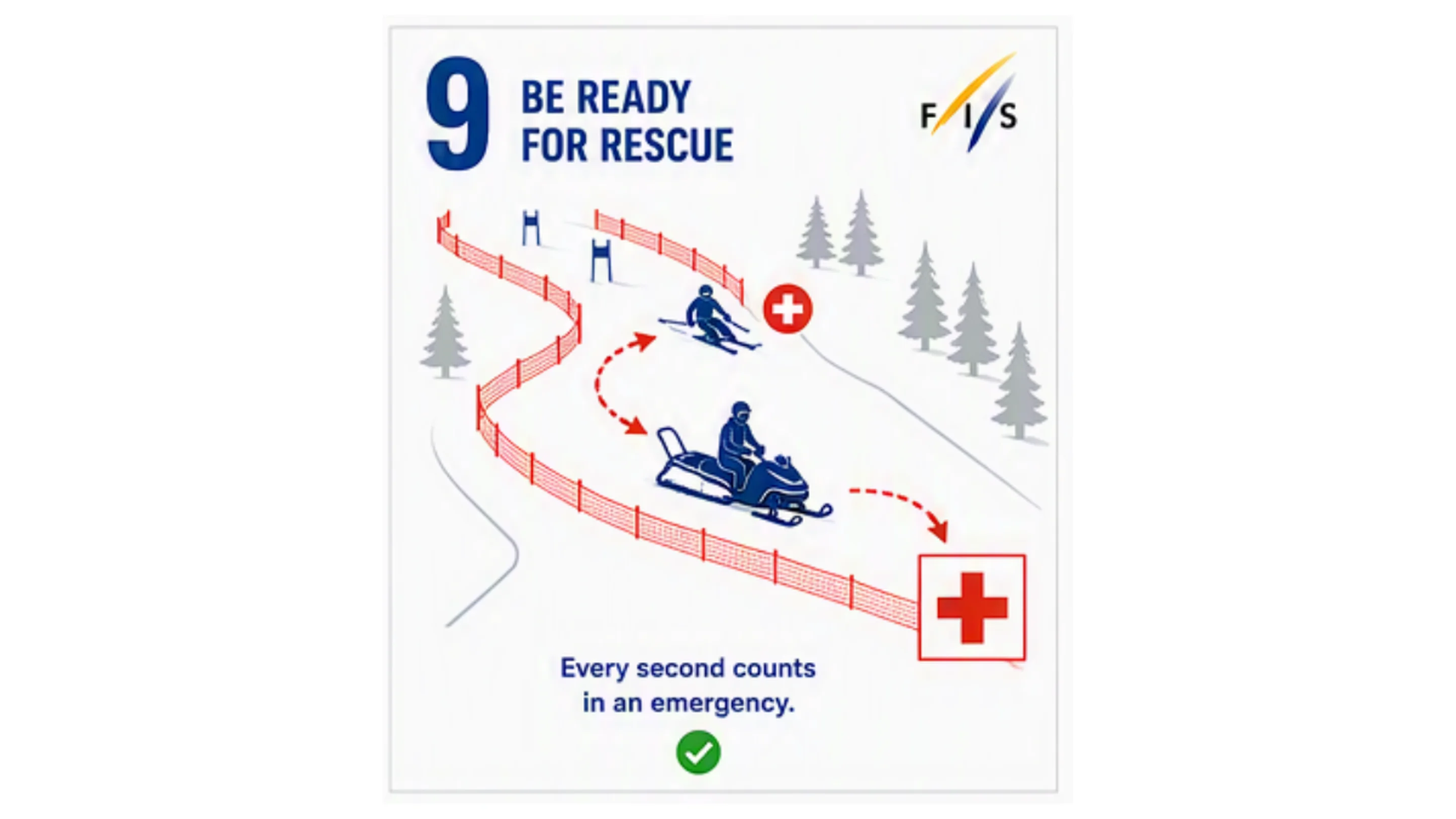
Rule 9: Arrange and Communicate Emergency Rescue Service
Local circumstances combined with additional resources should allow for a coordinated and quick rescue in case of an emergency. Emergency procedures should be clearly communicated.
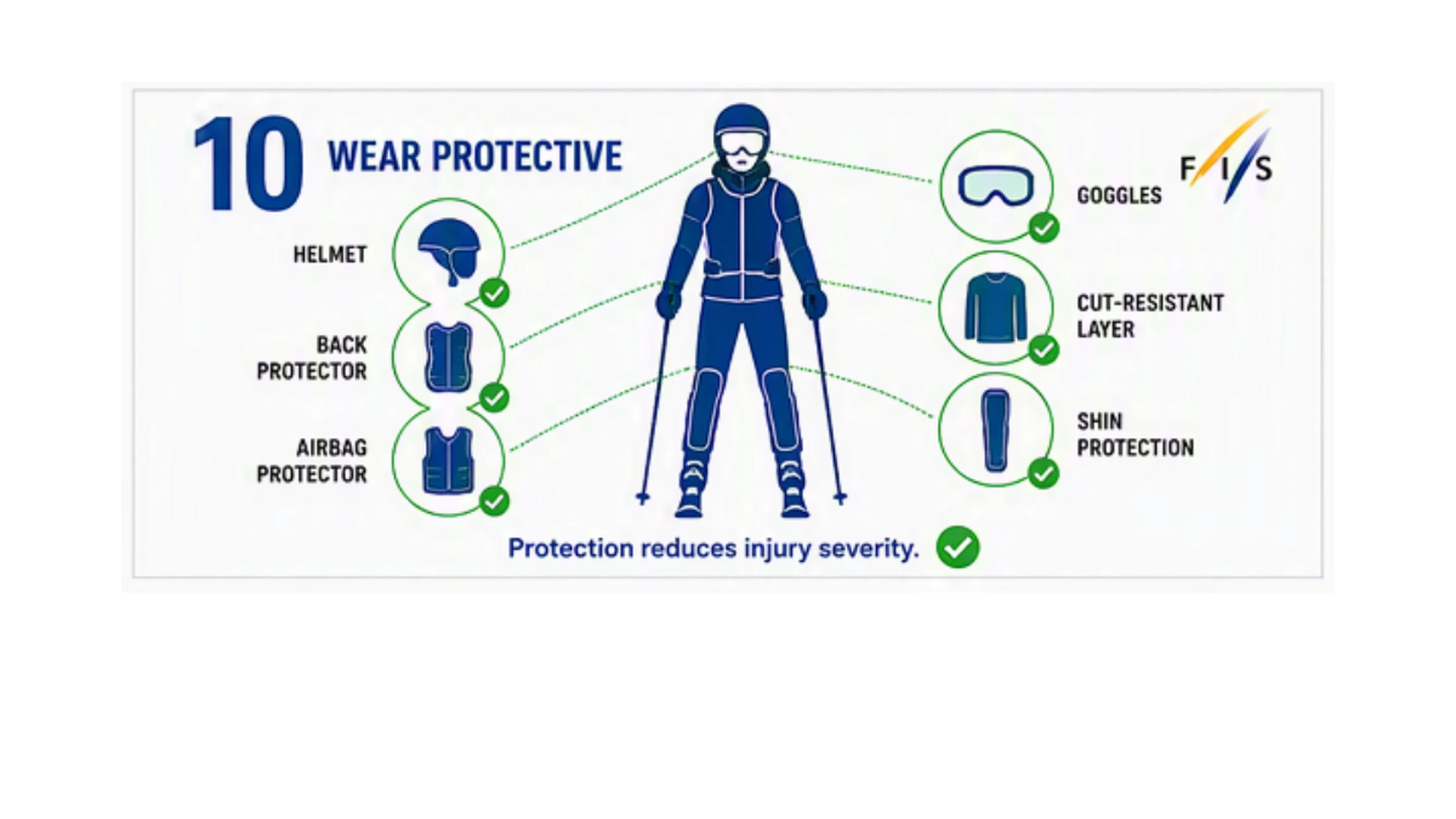
Rule 10: Expedite Athletes to wear Personal Protective Equipment
By using adequate and up to date personal protective equipment athletes can mitigate consequences in case of a crash. Considering discipline and age of athletes, helmets, back protectors, airbag protectors, cut-resistant undergarment and other protectors should be considered as standard
Frequently Asked Questions
Is the Code mandatory?
No. It is a set of recommendations meant to raise awareness and support good practice. It is not part of the competition rules.
What if I cannot follow a recommendation in a given situation?
Conditions on the slopes vary. When a recommendation cannot be applied, the aim is to think about how to reduce the risk in another way.
Who is responsible for what?
Safety in training is always shared between different persons and roles involved.
Who is the Code for?
People planning, organizing and performing trainings at all levels.
How can I use it with my team?
Share the infographic with staff and athletes and use it as a quick reference when planning and running training sessions.